
Door Insulation Works as Part of the Garage
Insulation slows heat but cannot make cold air
An insulated door reduces heat moving through the door face. An uncooled garage can still get hot through its roof, walls and air leaks. Call to discuss how you use the space.
Added panels change what the springs must lift
Foam kits add weight to the moving door. Existing springs may no longer balance that weight, even when the opener still moves it. Your technician checks the complete door before recommending an add-on kit.
A thicker panel cannot close a worn seal
Insulation and weather seals do different jobs. Panels slow heat through the door; perimeter weatherstripping and the bottom seal limit air leaks. Your technician checks both when a garage stays uncomfortable.
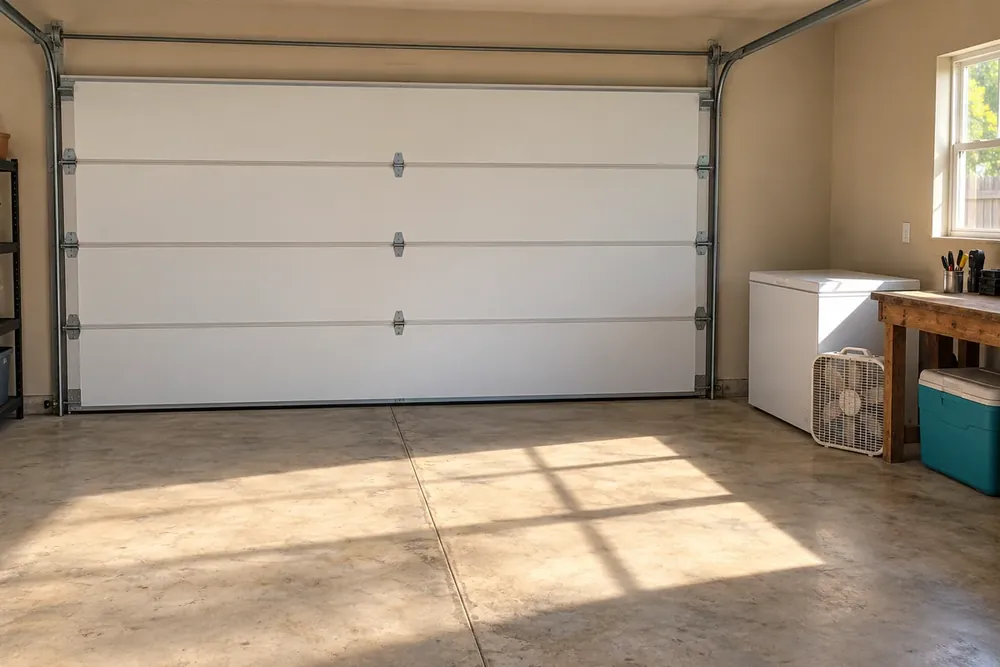
An insulated door slows heat gain; the rest of the garage still matters. Garage door insulation for summer heat addresses one large surface, while the roof, walls, windows and air leaks also affect comfort. Summers around San Antonio are long and hot. That regional heat makes a realistic plan more useful than a promise of a cool garage.
Match the door to how the garage is used
A workshop needs more attention to comfort than a storage bay. Insulation can reduce heat passing through the door face during a work session. It does not control humidity or hold a set room temperature without cooling.
A garage under living space also needs attention to the floor separating it from the room above. Door insulation alone cannot correct gaps or missing insulation in that floor. A freezer creates another limit: its allowed surrounding temperature comes from the appliance manufacturer. An insulated garage door does not establish that temperature or replace the freezer's required ventilation clearance.
A sound door may suit a kit
Add-on insulation makes sense only when the existing door suits it. Garage door insulation foam panels fit certain door sections, but compatibility depends on the door and kit. Thickness, the panel shape and secure retention all matter. Garage door insulation fasteners must suit the chosen system without interfering with hinges or section movement. Your technician checks the fit and the extra weight.
| Option | What it changes | What needs checking |
|---|---|---|
| Factory insulated steel door | Replaces the door with an insulated assembly | Opening size, hardware, spring balance and seals |
| Add-on foam kit | Adds insulation to suitable existing sections | Door condition, retention, clearance and added weight |
| Reflective system | Reduces radiant heat transfer in its specified assembly | Air space, product orientation and compatibility |
R-value describes resistance to heat flow
A higher R-value means greater resistance through the tested material. The Department of Energy's insulation explanation describes R-value as resistance to conducted heat. Compare figures measured on the same basis. A panel's stated value does not describe every joint, window or seal in an installed door.
For summer use, the useful comparison includes the whole opening. A high panel value cannot compensate for a damaged bottom seal or poor fit.
Foil needs the right air space
Reflective insulation depends on its installation, including the air space. The Department of Energy's material overview explains that reflective surfaces need an adjacent air space to work properly. A reflective door kit is therefore a system choice, rather than a substitute for any foam panel. Your technician follows the product's specified arrangement.
Extra weight belongs in the spring calculation
Even lightweight panels add to the door's total weight. Springs counterbalance that weight, as Clopay explains in its door component overview. Adding material can leave the original spring setup poorly matched. A stronger opener does not correct that mismatch.
A door that becomes crooked needs the opener stopped and people, pets and cars kept clear. Call for an assessment. Spring changes and balance checks belong with your technician.
Replace a damaged door rather than covering it
Insulation cannot straighten bent sections or restore failing joints. A new insulated steel door may be the better choice when damage, poor sealing and worn hardware all need attention. A suitable existing door may justify a kit instead. Door size, insulation construction, seals and any required hardware changes affect the scope. One of our local garage door partners explains those choices and their price before the job begins. Call to compare the repair with new door installation.