
Match the Stopping Point to the Symptom
A bang followed by a stalled door needs a technician
Leave the opener off and keep the door opening clear. A spring failure can leave the motor trying to move an unsupported door. Call about the bang and where the door stopped; leave lifting and release to your technician.
A working wall button points toward the remote controls
Check both the battery in the remote and the wall control's lock button. A control setting or weak battery can block remote operation. If the fault remains, call for diagnosis rather than replacing the entire opener by guesswork.
A door that refuses to close may have sensor trouble
Check the photo-eye lenses without adjusting brackets or wiring. Sensor trouble can prevent closing even when the motor opens the door normally. Keep people, pets and cars clear, and call about a door that stays open.
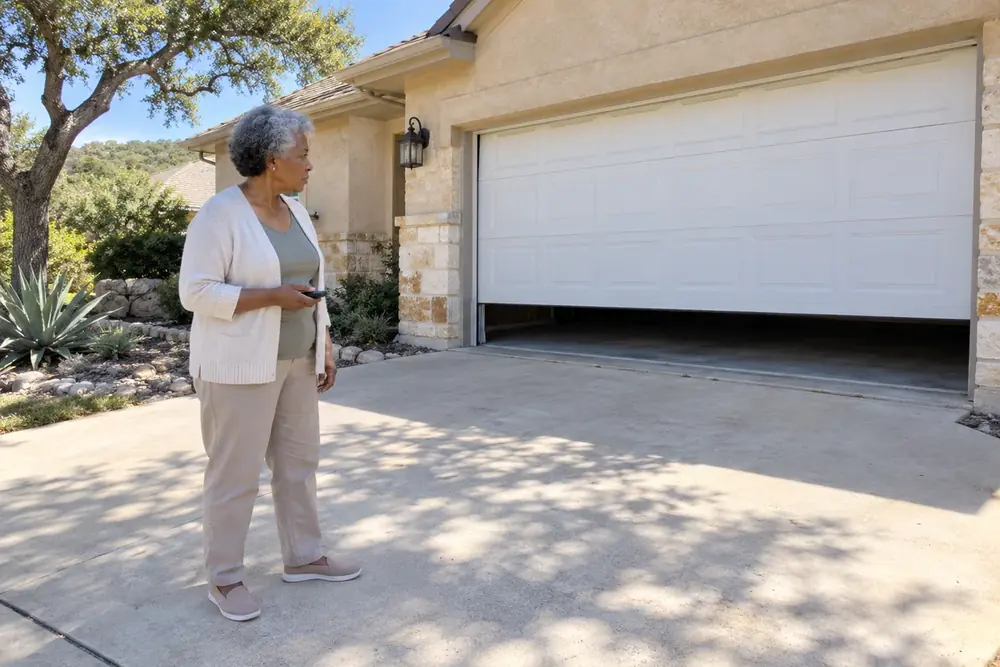
Matching garage door problems and solutions starts with the symptom. A silent motor, a brief hum and a door that tilts need different diagnoses. Call as soon as the failure interrupts normal use. You can describe what already happened without running the door again.
A stalled door is a reason to stop
A garage door humming but not opening needs diagnosis, not repeated button presses. Chamberlain's humming fault information lists broken springs among the possible causes. A motor or drive fault can also prevent movement. The sound alone does not prove the opener needs replacement.
If you are deciding what to do when your garage door won't open after a loud bang, stop using the opener. Keep people, pets and cars clear. Your technician checks the lifting system and the opener to find why the door stayed down.
A closing fault often starts at the eyes
If the garage door won't close, check the photo-eye lenses. Dirt or a sensor alignment fault can interrupt the beam. Chamberlain's closing fault information identifies sensor alignment as a common cause. Leave bracket adjustments and wiring to your technician; do not bypass the sensors or hold a control to force closing.
A floor reversal needs a travel check
A door that touches the floor and rises again may be traveling too far. Chamberlain's reversal information also lists door faults as a cause. Your technician checks travel and door movement. Changing force settings to push through the fault can hide the cause and weaken protection.
A short lift can signal a door problem
A door that opens a few inches and stops needs its lifting system checked. Resistance, lost spring support or an opener fault can stop travel. A bang, crooked edge or loose cable makes further operation unsafe. Stop running the opener and call for spring repair diagnosis rather than trying to lift the door yourself.
A halfway stop needs more than a reset
A door stopping halfway can have binding hardware or a travel fault. Your technician checks the door path and opener settings. The manufacturer's short-travel information explains that resistance can trigger a stop or reversal. Keep the opening clear; repeated cycles do not identify the faulty part.
A working wall button narrows the search
A garage door remote control not working while the wall button works points toward the control path. Check the remote battery and wall control's lock button. Chamberlain's remote troubleshooting also identifies programming and signal interference as possible causes. Your technician handles further diagnosis if those checks do not explain the fault.
An outage stops an opener without backup power
Loss of household power can stop an otherwise working opener. Battery backup only helps when the opener has compatible, working backup equipment. If power is present but the opener stays silent, your technician checks the supply and controls. Leave outlets, wiring and internal electrical parts alone.
Manual release belongs only with a fully closed door. Chamberlain's manual operation guidance warns that weak or broken springs can let an open door fall when disconnected. Leave release and lifting to your technician when the door has stalled or its condition is uncertain.
Share the symptom during the call
The stopping point helps your technician plan the diagnosis. Share any sounds, flashing lights and control differences you already noticed.
| What happened | Possible cause | What is safe now |
|---|---|---|
| Bang, then little or no lift | Spring or lifting fault | Stop running the opener; keep clear |
| Opens but refuses to close | Sensor or alignment fault | Check photo-eye lenses |
| Works only at the wall | Remote battery or control lock | Check the battery and lock button |
| Tilts or hangs unevenly | Cable, roller or track fault | Keep clear and call |
Call with the symptom, and one of our local garage door partners will explain the repair scope and price before work proceeds.