
The Fault and the Work Set the Bill
A broken spring bill starts with the door's weight
Spring work costs depend on the spring system, door weight and number of springs being replaced. Related cable or bearing damage adds work; an opener fault needs a separate diagnosis.
A crooked door needs more than a new cable
Cable repair charges reflect the replacement parts and the work needed to restore level travel. Bent tracks or damaged rollers change the scope. Stop running the opener and call about the tilt.
The visit belongs in the total repair bill
The total includes the work at your garage, not just a replacement part. Ask during the call about visit charges and after-hours terms; those charges need to be clear alongside parts and labor.
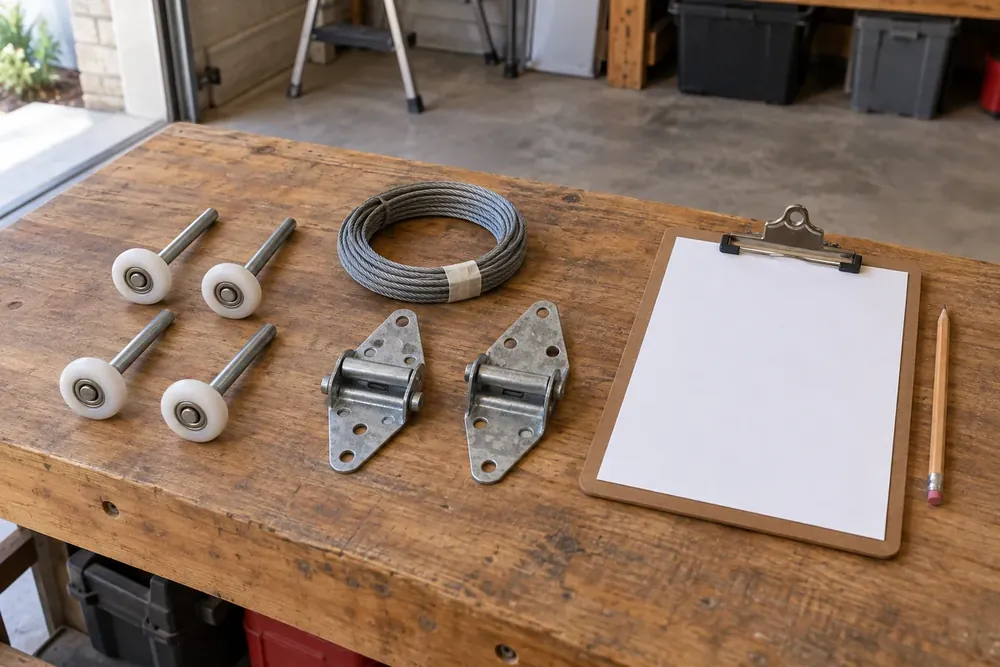
Price the fault and the repair together. Garage door repair prices reflect parts, labor and the visit to your garage. A door that will not lift might have a broken spring, damaged cable or opener trouble. The same symptom can lead to different work, so a useful quote begins with a diagnosis.
One of our local garage door partners will describe the needed repair and its total charge for your approval before starting. The written scope should distinguish necessary work from optional changes. Call about the symptom now; identifying the failed part is your technician's job.
Spring size follows the door's weight
A heavier door needs springs matched to its load. Garage door spring replacement price depends on the spring type, the door's weight and the parts needed to restore balance. Size matters, but insulation, glass and construction also affect weight.
For a door with two springs, replacing the pair belongs in the discussion. Clopay's Garage Door Safety Checklist recommends changing both together even when only one has broken. A door built with one spring has a different scope. A garage door spring repair price should cover replacement of a failed spring, rather than a patch to the broken coil.
Cable trouble can damage nearby parts
A new cable needs a door that travels level. Cable charges depend on the cable type, the condition of its matching cable and any damage to nearby hardware. A door hanging crooked may also need track correction or roller replacement. Your technician checks the cause so the new cable is not carrying the same uneven load.
Roller work depends on wheel size, stem length, material and the number of worn rollers. Replacing a worn roller differs from repairing the track that let it leave its path. Keep people, pets and cars clear of a crooked door and stop running the opener.
| Repair area | What changes the scope | What the written quote should identify |
|---|---|---|
| Springs | Door weight, spring system and paired replacement | Spring quantity and related repairs |
| Cables | Cable damage, uneven travel and affected hardware | Cable work and correction of the cause |
| Rollers | Fit, wear and track damage | Roller quantity and any track work |
| Opener | Failed component and compatible parts | Repair work or a separate replacement option |
An opener fault needs its own diagnosis
A motor that runs does not prove the opener is sound. A damaged drive part, control fault or sensor problem needs different labor and parts. Your technician also checks whether door resistance is loading the opener. Replacing electronics will not correct a failed spring.
Older equipment can complicate the bill when compatible parts are harder to obtain. A repair and a replacement should be compared as complete jobs. The opener repair page explains the service options.
Visit timing changes the total
The visit charge needs to be clear alongside the repair. Diagnosis takes work even when the final fix is small. Ask how the visit is charged and whether that charge is included in the repair total. After-hours work can have different terms; discuss those charges during the call.
An unseen door leaves too many questions for a firm online price. Door weight, existing damage, access and parts compatibility need assessment. Call with whatever you already know about the problem. A remote battery, wall-control lock button or photo-eye lens check is optional; none is a condition of calling.